
Hi there! I’m Wojciech Woszczyński, the founder, director, and lead veterinary surgeon here at Bluebell Veterinary Surgery in Southampton.
If you’re reading this, chances are you share your home with a French Bulldog, Pug, English Bulldog, Boston Terrier, or another one of our wonderfully characterful flat-faced breeds. Before I opened Bluebell, I spent years working in busy practices and emergency care, and I know exactly how incredibly lovable, loyal, and delightfully goofy these dogs are. I also know that hearing medical terms like “BOAS” or “surgery” can make your stomach do a bit of a flip.
I’ve sat with hundreds of owners just like you, having a cup of tea and talking through their worries. That’s exactly why I decided to focus our clinic on transparent, honest, and compassionate care. My goal today isn’t to frighten you with complicated medical jargon. Instead, I want to pull back the curtain on BOAS, explain exactly what it means for your dog
Beyond the Snore: A Judgment-Free Guide to Helping Your Flat-Faced Dog Thrive at Home
Hello again! It’s Wojciech Woszczyński, founder and lead vet here at Bluebell Veterinary Surgery in Bursledon, Southampton.
In our clinic, we see dozens of French Bulldogs, Pugs, and English Bulldogs every single week. We know exactly how much joy these characterful little dogs bring to your family. But we also know that managing their unique breathing needs—commonly known as BOAS (Brachycephalic Obstructive Airway Syndrome)—can sometimes feel overwhelming.
Today, I want to step away from the medical jargon and talk about the real, everyday reality of living with a flat-faced dog. From banishing “owner guilt” to simple life hacks you can start using today, here is our unique approach to supporting you and your best friend.
Welcome to the “No-Judgment” Zone
Let’s address the elephant in the room: owner guilt. Many owners feel terrible when they finally realize their dog’s “cute” piggy snorts are actually a sign of them struggling for air.
Please, do not feel guilty. Recent research from the Royal Veterinary College highlights that the signs of poor health in flat-faced breeds have become heavily normalized in our society through advertising and social media. When you see Bulldogs snoring in commercials, it’s entirely understandable to think it is just a normal breed quirk.
At Bluebell Vets, we are a strictly judgment-free zone. We will never make you feel bad for asking questions or for not noticing an issue sooner. Our only goal is to work together, look forward, and make your dog as comfortable as possible.
The “Mild BOAS” Home-Care Toolkit
If your dog only has mild breathing noises, surgery isn’t always the first step. Here are some highly effective, non-surgical life hacks we recommend to our Southampton clients:
Ditch the big dinners
Feeding four or five smaller meals a day, rather than two large ones, stops their stomach from becoming overly full. A full, stretched stomach presses up against the diaphragm, which makes taking a deep breath much harder.
Elevate their bowls
Serving meals in a raised feeder encourages a much more natural, upright posture. This simple change reduces airway stress while eating and drastically lowers the risk of acid reflux and regurgitation.
Invest in a cooling bed
Because their short airways make panting an inefficient way to cool down, flat-faced dogs love cooling gear. Elevated mesh cots that promote airflow underneath, or gel-infused cooling mats, are fantastic investments for the summer months.
Track their “RRR”
One of the best tools you have is measuring your dog’s Resting Respiratory Rate (RRR) at home. Wait until your dog is fully asleep, and simply count how many times their chest rises and falls in exactly 60 seconds. A normal resting rate is generally under 30 breaths per minute. If it consistently creeps higher, it’s time to give us a call.
In simple terms, and walk you through all the ways we can work together to give your furry best friend the happiest, most comfortable life possible.
Grab a cup of tea, and let’s dive into everything you need to know about your flat-faced friend’s breathing.
What Exactly is BOAS? (The Suitcase Analogy)
“Brachycephalic” is simply a veterinary word that translates to “short-headed.” Over many generations, humans have selectively bred these beautiful dogs to have adorable, flattened faces, large eyes, and short muzzles.
But here is the catch: while their outer skeletal muzzle has gotten much shorter, the soft tissues inside their mouth, nose, and throat haven’t shrunk at all.
Imagine trying to pack a thick, fluffy winter duvet into a very tiny weekend suitcase. Everything gets squashed, folded, and crammed in. In your dog’s airways, this crowding makes it much harder for air to flow freely. This means everyday breathing can sometimes feel like trying to breathe through a pinched drinking straw.
When this crowding causes significant breathing difficulties, we call it Brachycephalic Obstructive Airway Syndrome (BOAS). BOAS usually comes down to four main “roadblocks” in your dog’s airway:
Pinched Nostrils (Stenotic Nares)
Take a look at your dog’s nose. Are the nostrils wide and open, or do they look like tiny, closed slits? Narrow nostrils collapse inward when your dog takes a deep breath, acting like a blocked front door to the airway.
An Overly Long Soft Palate
The soft palate is the fleshy tissue on the roof of the mouth, right at the back of the throat. In flat-faced dogs, this tissue is often too long and thick. It flutters and drapes down over their windpipe, physically blocking the air from getting to their lungs.
A Crowded Nose (Congested Turbinates)
Inside the nose is a network of bone and tissue meant to warm the air. Because the snout is so short, these tissues are squashed together, creating a lot of friction and resistance when air tries to pass through.
A Narrow Windpipe (Hypoplastic Trachea)
Sometimes, the actual windpipe itself is underdeveloped and narrower than it should be, making it even harder for the air to finally reach the lungs.
How Does BOAS Affect Your Dog’s Daily Life?
Many of us have been told over the years that a Bulldog’s snort or a Pug’s loud snore is just a “cute” or “normal” quirk of the breed. But as a vet, I have to be honest with you: those noises are often your dog’s way of telling you they are working a little too hard just to catch their breath.
Here is what BOAS actually looks and sounds like at home:
The Noises (Snoring, Snorting, and Wheezing)
If your dog sounds like a little freight train when they sleep, or if they snort loudly while just resting on the sofa, that is the sound of air struggling past that long soft palate we talked about. Healthy breathing should be almost completely silent.
Tiring Out on Walks (Exercise Intolerance)
Does your dog suddenly plop down in the grass halfway through a normal walk? Do they pant heavily and struggle to keep up with dogs of a similar age? Because they have to work so hard to breathe, their bodies tire out much faster.
Tummy Troubles and Sickness
This one surprises many owners! Have you noticed your dog frequently gagging, retching, or bringing up white foam? Because they have to suck in air so forcefully, it creates a powerful vacuum effect in their chest. This vacuum can actually pull stomach acid upwards, causing uncomfortable heartburn and regurgitation.
Overheating in the Summer
Dogs don’t sweat like we do; they cool down by panting. Because flat-faced dogs have such crowded airways, their panting isn’t very efficient. They are extremely sensitive to warm weather and can overheat very quickly, which can be incredibly dangerous.
Other Quirks to Keep an Eye On
Because the shape of their skull is so unique, flat-faced dogs often have a few other little quirks that we like to keep an eye on alongside their breathing:
Beautiful, Bulging Eyes
Because their eye sockets are quite shallow, their eyes protrude a bit more. This means they might struggle to blink fully, leading to dry eyes or little scratches (ulcers) on the surface. We can easily manage this with soothing eye drops.
Cute Skin Folds
Those adorable wrinkles around their nose and tail can trap moisture and dirt. Giving them a gentle wipe daily helps prevent itchy skin infections.
Corkscrew Tails
The genetics that give some breeds a curly tail can sometimes affect the bones in their spine, making them a bit wobbly. We always give their backs a good check during their exams.
Our Friendly, Stress-Free Assessment
If you’ve noticed any of the signs above, please don’t panic. The very first step is simply to pop into Bluebell Veterinary Surgery for a chat.
We use a brilliant, standardized system developed by The Kennel Club and the University of Cambridge called the Respiratory Function Grading (RFG) Scheme. It is completely painless and actually quite fun for the dog! Here is how we grade it:
- Grade 0: Your dog is breathing perfectly quietly. No issues at all!
- Grade 1: We can only hear a tiny bit of noise when we use our stethoscope. Your dog is still very happy and unaffected.
- Grade 2: We can hear snorting or wheezing without a stethoscope, and your dog might struggle a bit after a quick trot around the clinic. This is the stage where we start discussing how to help them.
- Grade 3: Your dog is having a really tough time breathing, even when resting, and needs our help to get back on track.
During the assessment, we’ll listen to their chest, give them a gentle 3-minute brisk walk, and listen again. That’s it! No scary machines, just a walk and a listen.
How We Can Help (Without Surgery First!)
If your dog is showing mild signs of BOAS, there are several simple lifestyle tweaks we can do together before we ever talk about a surgical theatre:
Watch the Waistline
This is the absolute #1 most important thing! Even a single kilogram of extra weight adds fat around your dog’s neck and throat, squashing the airway even more. Keeping your dog perfectly slim is the best gift you can give them.
Ditch the Collar
Always walk your flat-faced dog on a well-fitting body harness, never a neck collar. Pulling on a collar press directly on their delicate windpipe.
Beat the Heat
In the summer, only walk your dog very early in the morning or late at night. Provide cooling mats and lots of fresh water.
Demystifying BOAS Surgery
If your dog is a Grade 2 or Grade 3 on the RFG scheme, and lifestyle changes aren’t quite enough, we might recommend a surgical procedure to open things up. Think of it as finally unblocking a permanently stuffy nose!
I know the idea of your baby going under anaesthetic is daunting, but these procedures are incredibly common, and we are highly experienced in managing them safely. Here is exactly what we do:
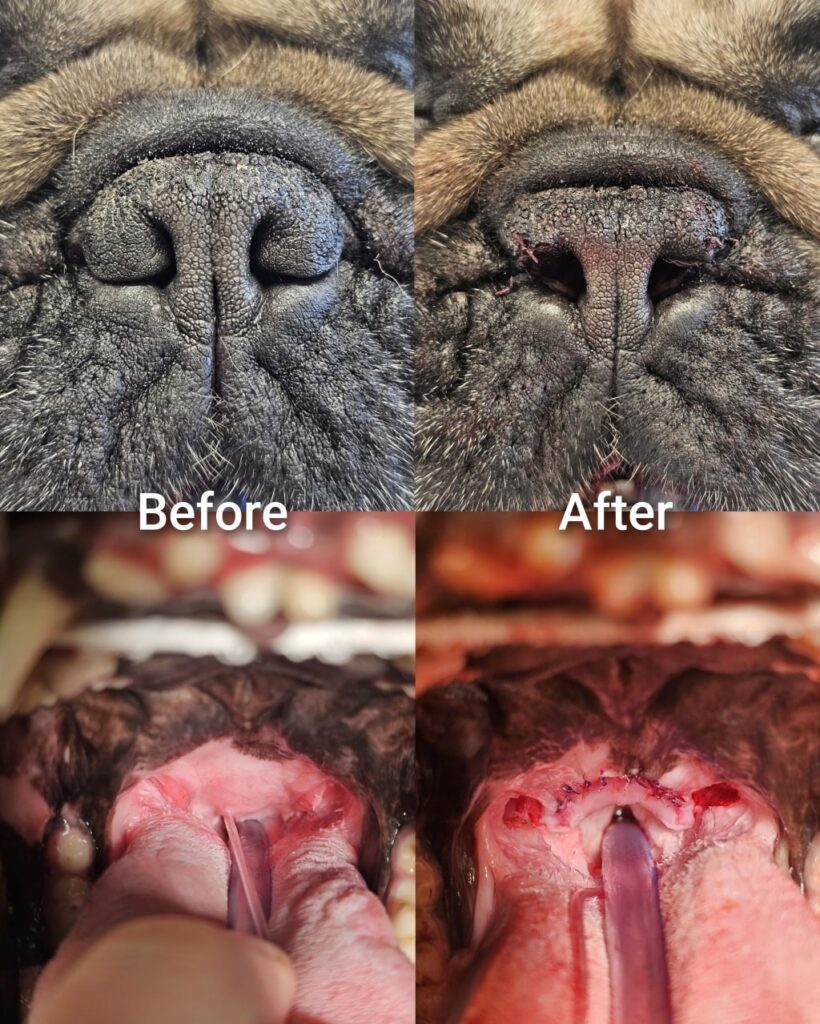
- Widening the Nostrils (Stenotic Nares Correction): We gently remove a tiny wedge of tissue from their pinched nostrils. This permanently opens the “front door” so they can take in a much bigger gulp of air with far less effort.
- Shortening the Soft Palate: We carefully trim back that excessively long, fluttery tissue at the roof of their mouth so it no longer blocks the entrance to their windpipe.
Keeping Them Safe: Because anaesthesia requires extra care for these breeds, your pet’s safety is our absolute top priority. We use state-of-the-art monitoring equipment, and our dedicated nursing team watches them like hawks the entire time they are waking up, ensuring they are calm, pain-free, and comfortable.
What to Expect After: While surgery isn’t a “magic cure” that completely changes the shape of their head, it is often totally life-changing. Owners frequently tell us their pets wake up happier, have so much more energy for playtime, cope much better in the heat, and finally sleep peacefully without that loud snoring. They will still be a flat-faced dog, and might still snort when they are very excited, but their day-to-day comfort will be vastly improved.
Let’s Talk About Costs and Pet Insurance
I believe in being completely transparent about the “business” side of veterinary care. Because BOAS surgery is delicate and requires intensive, dedicated nursing care during recovery, it does come with a cost. A comprehensive BOAS surgery package (covering the palate, the nostrils, the anaesthesia, and the aftercare) typically averages around £1850 to £3,500 in the UK, depending on exactly what your dog needs.
A quick tip on Pet Insurance: If you are bringing home a flat-faced puppy, get comprehensive pet insurance from day one—before they ever show a single sign of a breathing issue.
- Check the Fine Print: Look very closely at the policy terms. Some cheaper policies place strict “inner limits” on BOAS (meaning they will only pay out a small fraction of the surgery cost).
- Pre-existing Conditions: Insurance companies will not cover BOAS if your vet has previously noted “snoring” or “noisy breathing” on your dog’s record before the policy started.
Minnie’s BOAS Surgery
Minnie recently visited our clinic for BOAS (Brachycephalic Obstructive Airway Syndrome) surgery, a procedure designed to help brachycephalic dogs breathe more comfortably. Dogs with shorter noses—such as pugs, bulldogs, and French bulldogs—often have airway structures that can restrict airflow, making breathing more difficult during exercise, excitement, or warm weather.
BOAS surgery works by improving the structure of the airway, helping create a clearer and more efficient passage for air to move in and out of the lungs. This can significantly improve a dog’s comfort, stamina, and overall quality of life.
Minnie handled both the anaesthetic and the surgery wonderfully, and her recovery in the clinic went smoothly. She was bright, comfortable, and recovering well shortly after the procedure. Since returning home, Minnie continues to do very well and is enjoying a comfortable recovery.
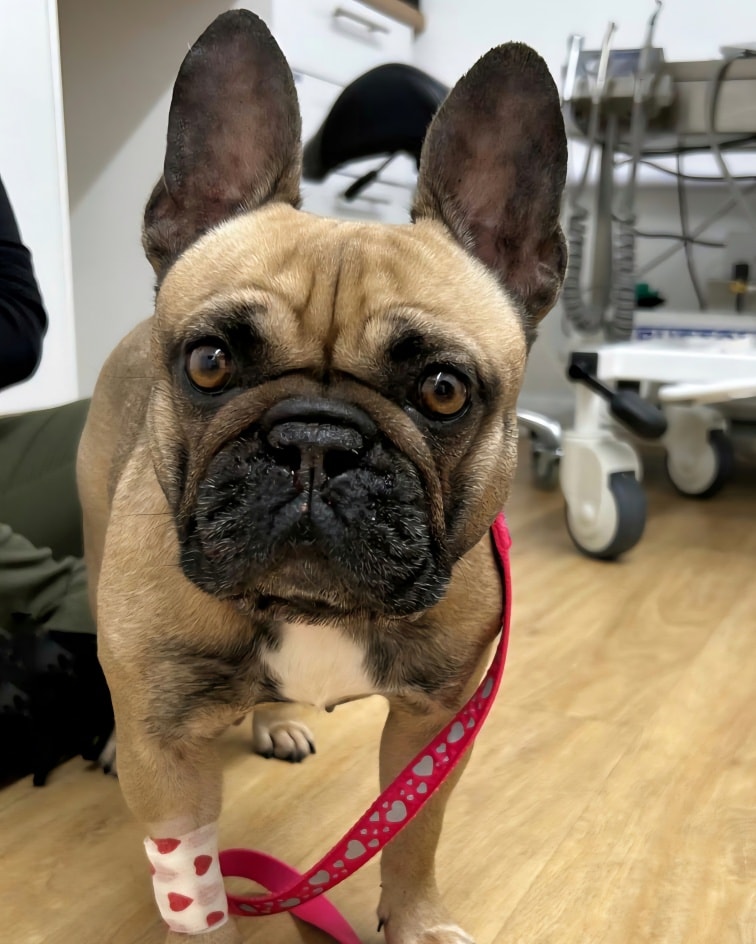
The surgery was performed by Wojciech Woszczyński, founder, director, and lead veterinary surgeon at Bluebell Veterinary Surgery in Southampton, who has extensive experience treating airway conditions in brachycephalic breeds.
You can see before and after photos of Minnie, which clearly show the positive difference this procedure has made. Videos showing her recovery and progress will be shared soon.
We’re incredibly proud of Minnie and delighted to help her move forward with a more open airway and easier breathing, helping her enjoy everyday life to the fullest. 🐾💙
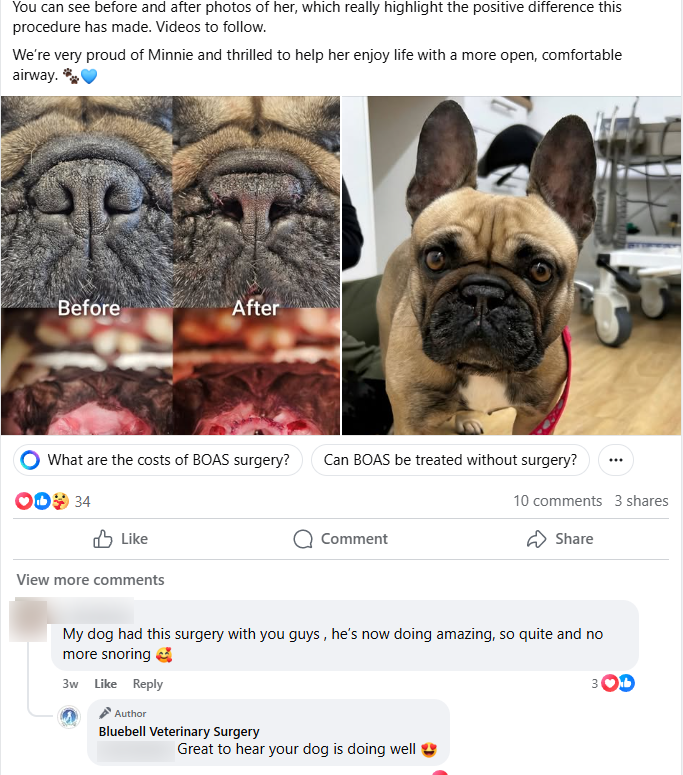
Here is the review from the Minnie parent:
Advice for Future Puppy Parents
If you are reading this because you are thinking about bringing a Frenchie, Pug, or Bulldog puppy into your life, that’s wonderful! We just ask that you do your homework to find a responsible breeder.
- Ask for Health Certificates: A great breeder will happily show you the RFG (Respiratory Function Grading) certificates for the puppy’s parents. You want a puppy whose parents both scored a Grade 0 or a Grade 1.
- Meet the Parents: Listen to the mother and father breathe. If the parents are struggling for air or snorting loudly while just standing there, it is highly likely the puppies will have the same struggles.
My Promise to You
At Bluebell Vets, we believe in transparent, honest advice without the scary medical jargon. Whether you need a simple health check, advice on weight management, or a second opinion on your dog’s breathing, we are here for you.
If you are ever worried about your flat-faced friend, please don’t hesitate to reach out. Give us a call at 02382512789 or drop by the clinic at 7 Manor Crescent in Southampton. We’ll put the kettle on, answer your questions, ease your worries, and give your pet the compassionate care they deserve.
Warmly,
Wojciech Woszczyński
Veterinary Surgeon – Founder and Director
Bluebell Veterinary Surgery